Dairying: Helping to Improve the Sustainability of Rural Livelihoods
Dairying: Helping to Improve the Sustainability of Rural Livelihoods
Dairy is much more than milk. Around the world, cows and buffalo support jobs, regular income, provide nutritious food and stronger links to local markets, from family farms to larger operations. Not surprising then that Rural Economies remains one of the most prioritised DSF Sustainability Criteria by members, after Animal Care and GHG Emissions.
Milk brings something many crops cannot: steady cash flow. Milk sales help families pay for food, school fees, healthcare, transport and farm inputs. FAO estimates that around 150 million households are involved in milk production, with smallholders playing a vital role in many developing countries.
That impact reaches well beyond the farm gate. Dairy connects farmers with feed suppliers, vets, milk collectors, processors, transporters, retailers and advisers. Local processing into products like cheese, yoghurt, butter and ghee can extend shelf life and importantly, retain value in rural communities.
Together, cow and buffalo milk provide more than 96% of the world’s milk. Dairy foods also make an important contribution to sustainable, nutritious diets, providing high-quality protein, calcium and other essential nutrients while supporting food security in many rural households and beyond. Women are central to this story. In many regions, they care for animals, manage the milk and are responsible for the household income.
In short, dairy helps power rural economies. Around one billion people depend on the sector for livelihoods and community resilience worldwide. DSF Annual Sustainability Progress – 2024 calendar year reporting provides insight into the gender profile of workers across the 50% of global formal milk production tracked by DSF.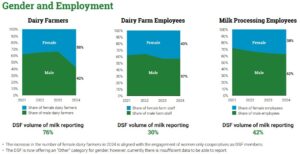
Continuous improvement in soil and water management, animal welfare, productivity, feed efficiency, manure management and emissions reduction will be vital to keep dairy sustainable, locally valuable and resilient in the future for all who work within the sector.