New Report: How prevention can reduce the need for antibiotics
New Report: How prevention can reduce the need for antibiotics
 The use of antimicrobials in agriculture and food production has significantly contributed to improved animal welfare and safer production systems. These medicines are the only way to treat bacterial diseases and remain a critical piece of global agri-food systems.
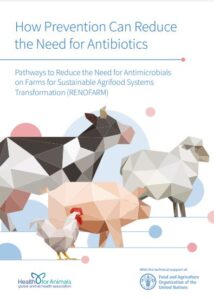
However, overuse and misuse of these critical tools can lead to the development of Antimicrobial Resistance (AMR), which not only threatens human health but also undermines the long-term viability of agricultural production. A new report, How Prevention can reduce the need for Antibiotics, outlines practices and tools that can help to reduce the need for antimicrobials whilst balancing with animal welfare requirements. The report, written by HealthforAnimals, contains case studies and project profiles and outlines tools and practices that can reduce the need for antimicrobials such as vaccination, biosecurity, genetics, digital technologies and more. FAO’s RENOFARM Team and AMR Working Group supported the development of the report.
Find out more about HealthforAnimals and the Reduce the Need for Antimicrobials on Farms for Sustainable Agrifood Systems Transformation (RENOFARM) initiative.