Celebrating Women in Zimbabwe’s Dairy Sector
Celebrating Women in Zimbabwe’s Dairy Sector
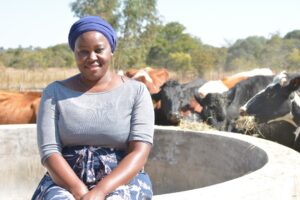
Zimbabwean dairy farmer with her recent investment, a newly installed water trough
This month, the Zimbabwe Association of Dairy Farmers (ZADF) joined the global dairy community in marking World Milk Day by celebrating the growing contribution of women in dairy. ZADF Policy Advisor Antonnette Chingwe, explained how women dairy farmers in Zimbabwe are investing, innovating and helping to build a more sustainable future for the sector.
Women now make up just over 30% of dairy farmers in Zimbabwe, and their participation continues to grow despite it being historically male dominated due to high capital requirements and limited access to finance for women. Many women farmers operate on a small scale, often with fewer than 20 cows and daily production of under 200 litres of milk, but their ambition and impact are significant. ZADF has documented success stories of women who started at a small-scale level and built productive herds through training, market participation, and gradual graduation to commercial scale proving that women can and do thrive in dairy when opportunities and support systems align. This year’s World Milk Day field day was even hosted by a woman dairy farmer who left a career in banking to build her own dairy enterprise.
The field day brought together farmers, industry stakeholders, processors and government representatives, while ZADF recognised women farmers through awards, a social media photo competition and locally sourced heifers for selected winners.
A key part of ZADF’s work is delivered through partnerships with development organizations, the Government of Zimbabwe and the private sector. Through the We Effect - iMOVED Project, funded by the Embassy of Sweden, farmers can access technical training and financial support through a matching grant model, where farmers contribute part of the investment cost and the project funds the remainder.
These investments are helping farmers improve productivity, resilience and sustainability. Solar systems are supporting milking and milk cooling where power supplies can be unreliable, while solar-powered irrigation is helping farmers strengthen pasture and fodder production and reduce reliance on purchased concentrates. Boreholes, water and feed troughs have contributed to improved milk production, and the purchase of heifers is helping farmers increase production and expand herds with improved genetics. In addition to on farm investment, projects have helped to fund new central milk collection centres where milk can be aggregated and cooled, ready for collection by processors.
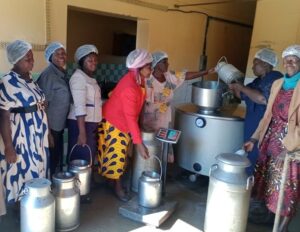
Dairy farmers arriving at a milk collection centre in Zimbabwe
While the projects are geographically targeted and open to both men and women, women are prioritised where project objectives allow. For ZADF, this approach is about more than recognition: it is about giving women the tools, training and confidence to invest in their farms, grow their businesses and lead change in the sector.
Beyond project delivery, ZADF supports dairy farmers across Zimbabwe with farm monitoring, technical training, artificial insemination, nutrition and genetics advice, and regulatory advocacy. As the sole national dairy association, it plays a key role in strengthening milk production and long-term industry growth.
The celebrations showed how supporting women in dairy can deliver practical impact, helping farmers build sustainable businesses and strengthen Zimbabwe’s dairy sector.