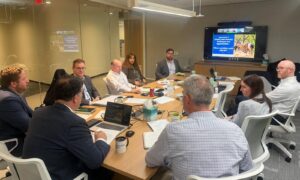
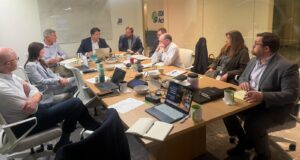
DSF Advisory Council Spring Meeting, (Washington, DC)
DSF Advisory Council Spring Meeting, (Washington, DC)
The DSF’s multi-stakeholder Advisory Council (ADCO) meets twice a year and serves as a vital resource to DSF Governors by providing feedback, challenging assumptions, and helping source solutions to DSF related sustainability challenges. This group convened last month in Washington, DC, where the meeting was kindly hosted by ADCO Member, the Environmental Defense Fund (EDF).
The agenda featured important stakeholder discussions about DSF’s programming, food security, dairy’s important roles in nutrition and sustaining livelihoods, navigating new technology as a global dairy sector, and a discussion about the carbon marketplace. First, EDF provided an overview of their laudable work in sustainable agriculture, including significant resources focused on livestock methane emissions.
 Next, Brian Lindsay (DSF Secretariat) briefed the ADCO on the 2025 reporting process, 2026 strategic goals, and Stage 1 capacity building pilots. Between engagements in Zimbabwe and India, these pilot projects have potential to engage over 200,000 dairy producers with DSF educational resources about conducting materiality assessments, increasing productivity, effectively managing waste, etc. DSF has also launched a multi-stakeholder collaboration to grow DSF membership throughout Latin America. Training is underway in Uruguay, Costa Rica, and the Dominican Republic to support those nations in developing the skills needed to implement the DSF process and, eventually, progress to reporting members. All along the way, the DSF strategy involves working in collaboration with local dairy organizations to build capacity so that DSF experts do not always need a presence in the field.
The ADCO then engaged in constructive conversation about dairy’s role in global food security, challenges for less mature dairy markets, uncertainty facing farmers, de-risking dairy financing, and new dairy technologies, such as “3NOP” for enteric methane management. The ADCO’s input included reiterating the need for continued alignment in global sustainability reporting, the need to identify more ways to successfully de-risk financing to scale productivity improvements, and the necessity of the global dairy sector sharing a narrative about acceptance of future technological developments that help dairy. The discussion covered the possibility of future DSF metrics that could be valuable to the dairy community, such as access to advisory services of feed infrastructure, but noted that new data requests must demonstrate clear value back to DSF members. The group also expressed alignment about the reality that different dairy producing regions will inevitably decarbonize at different paces, especially when food security remains a key priority in certain markets.
 Building on the importance of dairy for global nutrition, Global Dairy Platform’s Beth Bradley presented on the history of governmental dietary guidelines, recent nutrition science, the high-protein trend in relatively mature dairy markets, and the consideration of sustainability alongside nutrition in global diets. Importantly, this presentation highlighted the potential value that a DSF nutrition-focused metric could contribute to dairy’s narrative about sustaining healthy people and a healthy planet.
This ADCO meeting was a great success with valuable networking opportunities for the 19 DSF stakeholders who attended. One key action item identified was outreach to potential new ADCO members with a focus on a multinational food service corporation and a social science-oriented NGO or foundation. Our next ADCO meeting will be in December.
See our website for more details of the people and organisations in the DSF Advisory Council.